When Churches Act Like Businesses Instead of Bodies
As an independent Baptist, it frustrates me to see local churches operate like businesses rather than spiritual organisms. I share these thoughts not out of bitterness or harsh criticism, but out of love for Christ’s Church and a sincere desire that readers will think critically about these issues. My motive is hope — that the local assembly will rediscover its spiritual identity and return to decisions made through prayer, Scripture, and the leading of the Holy Spirit rather than human structures and traditions.
When a church searches for a pastor, they often say they want a Godly man—but what follows looks more like corporate hiring than spiritual seeking. Resumes are gathered, college pedigrees are weighed, and the search becomes a process of reputation-checking instead of prayerful discernment.
Instead of turning the pastoral search into a résumé competition, why not take a more biblical approach? Schedule pastoral candidates to preach and allow the church to hear their heart, doctrine, and spirit. Then, the congregation can seek God’s direction together in prayer until His choice becomes clear. Scripture gives us many examples of prayerful leadership and decision-making—never corporate headhunting or managerial selection.
The Problem with Licensing and Ordination
Don’t assume that licensing or ordination are the only true “calling cards.” I challenge the IFB to truly study licensing and ordination. Have you studied the history and practice of ordination? In my experience, ordination has often been unstudied by the very churches that require it.
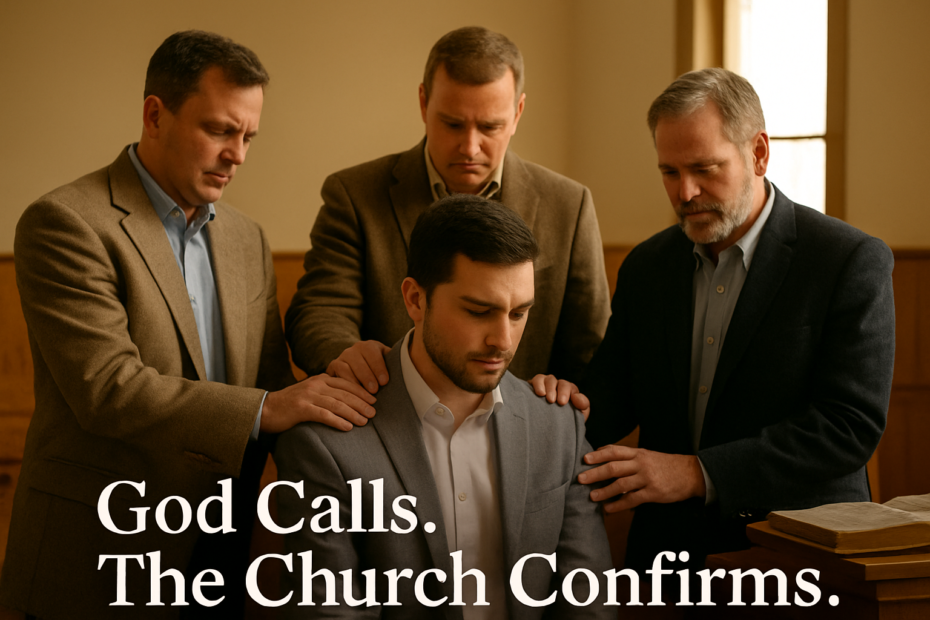
Too frequently ordination becomes a time to belittle and mentally test the candidate—based on the preferences or beliefs of a so-called council—rather than a time of confirmation. If we claim to be independent, our practices should reflect it. Men in the local church ought to lay hands on the candidate, not call in elders or pastors from other churches who hold no authority in the local assembly.
God Calls — The Church Confirms
God does the calling; the Holy Spirit sends. The church’s role is to confirm evidence of that call, not to decide whether God’s call is valid. A genuine call will carry desire, burden, and fruit. Look for evidence: passion to preach God’s Word, a burden for souls, and spiritual fruit
(Jer. 20:9; Mal. 1:1; Hab. 1:1; John 15:16).
It isn’t the church’s job to certify a call as “approved by men,” but to look for the evidence of the Spirit’s work in a life.
Where Ordination Came From
The modern practice of “Baptist” ordination is not a clear reproduction of New Testament procedure; it carries historical influence from Catholic, para-Baptist, and convention practices. As one historian noted:
“Baptist ordination, however, is not an exact reproduction of any New Testament or Early Church practice. The New Testament gives no comprehensive instructions for ordination.”
Charles Spurgeon once said of ordination:
“Laying idle hands on empty heads.”
Too often, churches elevate the authority of men above the authority of God. Many congregations are governed by pastoral preferences rather than by the authority granted to the church body by Scripture.
Where Should Our Confidence Rest?
If your ordination certificate is signed by men who later fail, fall, or compromise—does that change the weight of your calling? I would rather rest my calling, burden, and confirmation upon the One who never fails.
Questions for reflection:
Are we truly independent? If so, should our ordination practices reflect that independence? What should be the role of the local church in confirming a calling?
As it relates to the church, “licensing” and the elaborate ordination rituals are requirements of man, not God. Think critically about the roots and the fruits.