Introduction
Disclaimer: The ideas shared here are not original to me. They are drawn from existing research in child development and psychology, along with observations commonly discussed by educators and parents. I’m simply sharing what aligns with both the research and what many families experience in real life.
When it comes to toddlers, less is often more.
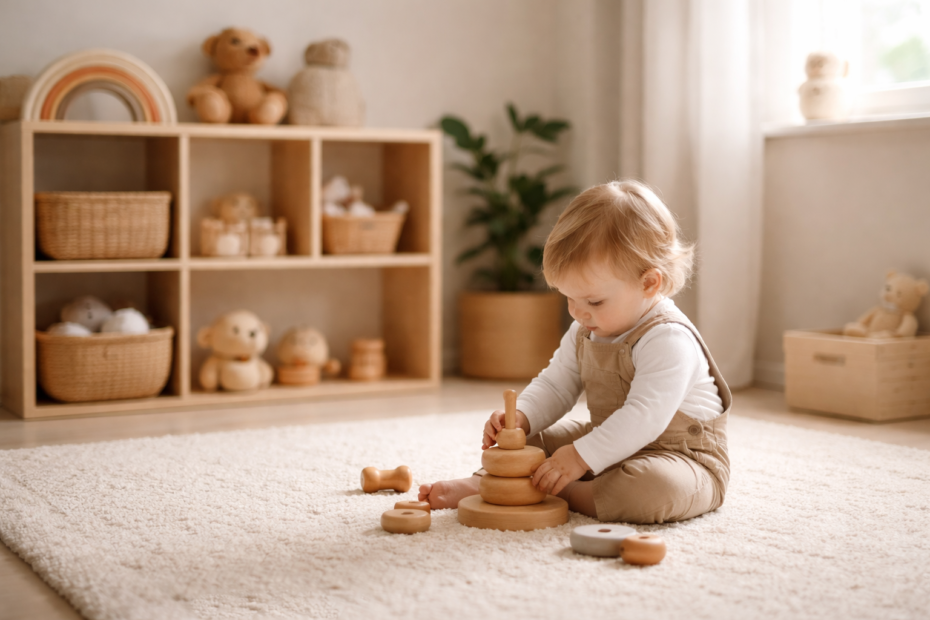
Picture a toddler in a room overflowing with toys. Shelves packed. Bins overflowing. Options everywhere. At first glance, it feels generous—loving, even. But I’ve come to believe that too much can actually work against a child’s development rather than help it.
This isn’t about deprivation. It’s about clarity, focus, and helping a child grow in healthy ways.
The Problem with Too Many Choices
Modern culture tends to equate more with better. More toys, more options, more stimulation. But toddlers aren’t wired the same way adults are.
Research in early childhood development points to a few consistent issues when children are given too many options at once:
-
Overstimulation
-
Shorter attention spans
-
Frustration and irritability
-
Shallow, distracted play
-
Difficulty making decisions
Instead of engaging deeply, children often bounce from toy to toy, never fully settling into meaningful play.
What the Research Suggests
Several child development studies have found that when toddlers are given fewer toys, they:
-
Play longer with each toy
-
Show greater creativity and imagination
-
Demonstrate better focus and persistence
-
Experience less emotional overload
This aligns with what psychologists call choice overload or decision fatigue. When the brain—especially a developing one—is flooded with options, it becomes harder to engage, enjoy, or choose well.
In simple terms:
Too many choices can overwhelm a child’s ability to play well.
How This Affects Discipline and Attitude
This is where it gets practical for families.
When a child is overwhelmed, it often shows up as:
-
Fussiness
-
Disobedience
-
Disinterest
-
Emotional meltdowns
But when the environment is simplified, children often become:
-
More content
-
More engaged
-
Easier to redirect
-
More confident in their decisions
Structure doesn’t stifle children—it actually frees them.
A Simple, Practical Approach for Families
This doesn’t require throwing everything out.
Here’s a balanced approach many families find helpful:
-
Rotate toys instead of displaying all of them
-
Keep only a small selection available at one time
-
Choose toys that encourage imagination rather than constant stimulation
-
Observe which toys invite deeper engagement
You may be surprised by how a child’s attitude and focus shift when the noise is turned down.
Final Thought
This isn’t about being strict, trendy, or minimalist for its own sake. It’s about being intentional.
Sometimes the most loving thing we can do is not add more—but remove what distracts.
When we create space, children often fill it with creativity, focus, and growth.
And sometimes…
Less really is more.